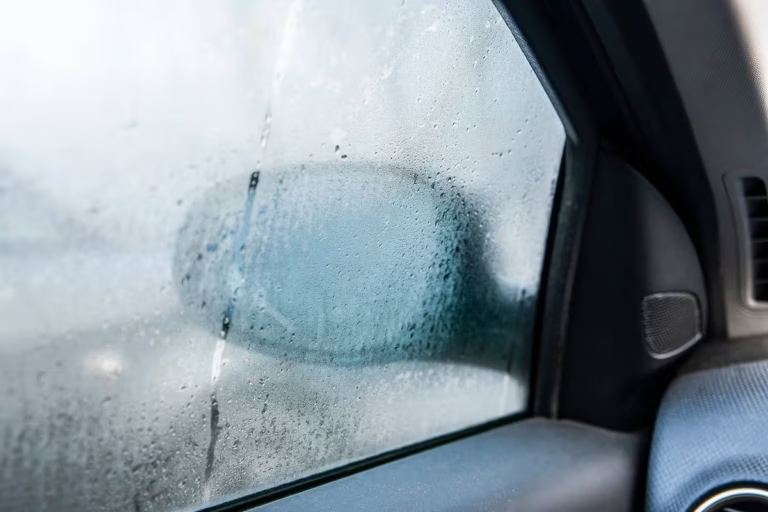
Why is my car losing coolant but not overheating? This issue can be confusing and easy to ignore, especially when the temperature gauge stays within the normal range. Many drivers assume there’s no immediate problem, but in reality, losing coolant without overheating often points to an underlying fault that can quickly escalate into serious engine damage if left unchecked.
Modern engines are designed with built-in tolerances, allowing them to temporarily cope with low coolant levels. However, coolant is essential not only for temperature control, but also for corrosion prevention, lubrication, and maintaining consistent engine performance. When coolant levels drop, an engine may continue to run normally for a short time — until sudden overheating or mechanical failure occurs.
In this guide, we’ll explain why your car is losing coolant but not overheating, the most common causes of coolant loss, the warning signs to look out for, and what steps to take before a minor issue turns into an expensive repair.
What Does It Mean If My Car Is Losing Coolant But Not Overheating?
If your car is losing coolant but the engine temperature remains normal, it usually means the coolant loss is slow, internal, or occurring only under certain conditions. Small leaks, evaporation, or internal engine issues can allow coolant to escape without immediately triggering overheating.
Because modern cooling systems are pressurised and monitored by sensors, temperature readings may stay within a safe range until coolant levels drop significantly. This makes the problem easy to miss during everyday driving.
Expert insight:
“A vehicle can lose coolant for weeks without overheating, especially if the leak is slow. The danger is that drivers often don’t notice until the engine overheats suddenly.”
— Mark Ellison, Master Vehicle Technician
Common Causes of Coolant Loss Without Overheating
Minor External Coolant Leaks
Small leaks from hoses, hose clamps, or the radiator can allow coolant to escape slowly. These leaks may only appear when the engine is hot and under pressure, making them difficult to spot.
Coolant may evaporate on hot engine components before it ever reaches the ground, leaving no visible puddles.
Faulty Radiator Cap
A worn or faulty radiator cap may fail to maintain proper system pressure. This allows coolant to escape as vapour rather than liquid, especially during longer drives, without causing immediate overheating.
Coolant Expansion Tank Issues
Cracks in the coolant reservoir or a loose cap can allow coolant to escape gradually. Because the loss is slow, the engine temperature may remain stable for some time.
Water Pump Leaks
Water pumps often leak through a small “weep hole” when seals begin to fail. These leaks can be minimal at first and may only occur while driving, leaving little evidence when parked.
Heater Matrix (Heater Core) Leak
A leaking heater matrix can cause coolant loss without overheating. Signs include misted windows, a sweet smell inside the cabin, or damp carpets — particularly on the passenger side.
Internal Coolant Loss (Head Gasket Issues)
In some cases, coolant may be entering the engine internally through a failing head gasket or cracked component. Small internal leaks may not cause overheating immediately but can lead to coolant loss with no visible signs.
Expert insight:
“Not all head gasket issues cause instant overheating. Early-stage failures can result in coolant loss with normal temperature readings.”
— Sarah Whitmore, Automotive Diagnostics Specialist
Warning Signs Your Car Is Losing Coolant

Even without overheating, there are several symptoms that indicate coolant loss:
- Coolant warning light or low coolant message
- Frequent need to top up coolant
- Sweet or chemical smell from the engine bay or cabin
- White residue around hoses or radiator
- Steam from the engine bay after driving
- Poor cabin heating performance
Ignoring these signs can lead to sudden overheating and engine damage.
Is It Safe to Drive If My Car Is Losing Coolant?
Driving with a coolant leak is not safe, even if the car is not overheating yet. Coolant levels can drop rapidly without warning, especially on longer journeys or in warm conditions.
Once coolant levels fall below a critical point, the engine can overheat very quickly, potentially causing warped cylinder heads, blown head gaskets, or complete engine failure.
If you suspect coolant loss, it’s best to have the vehicle inspected as soon as possible.
What to Do If Your Car Is Losing Coolant
Start by checking the coolant level when the engine is cold and topping up with the correct coolant type if necessary. Inspect visible hoses, the radiator, and the coolant reservoir for leaks or residue.
If coolant loss continues, a pressure test can help identify leaks that aren’t visible during normal inspection. A professional mechanic can also check for internal leaks using diagnostic tools.
Never ignore repeated coolant loss, even if the temperature gauge appears normal.
How to Prevent Coolant Loss
Regular servicing helps catch early signs of coolant leaks. Hoses, clamps, the radiator, and the water pump should be inspected periodically.
Coolant should be replaced according to the manufacturer’s schedule, as old coolant can become corrosive and damage seals.
Always use the correct coolant specification for your vehicle, as mixing incompatible coolants can cause seal failure and internal corrosion.
Frequently Asked Questions
Why is my car losing coolant but not overheating?
This usually happens due to slow external leaks, evaporation, or early-stage internal issues that don’t immediately affect engine temperature.
Can a car lose coolant without leaking?
Yes. Coolant can escape as vapour through a faulty radiator cap or be burned internally through a failing head gasket without visible leaks.
How often should I top up coolant?
You should not need to top up coolant regularly. Frequent top-ups indicate a leak or system fault.
Can a coolant leak damage my engine?
Yes. Continued coolant loss can cause overheating, engine warping, head gasket failure, and severe engine damage.
Is it expensive to fix a coolant leak?
Costs vary depending on the cause. Simple hose or cap replacements are inexpensive, while internal engine repairs can be costly if ignored.