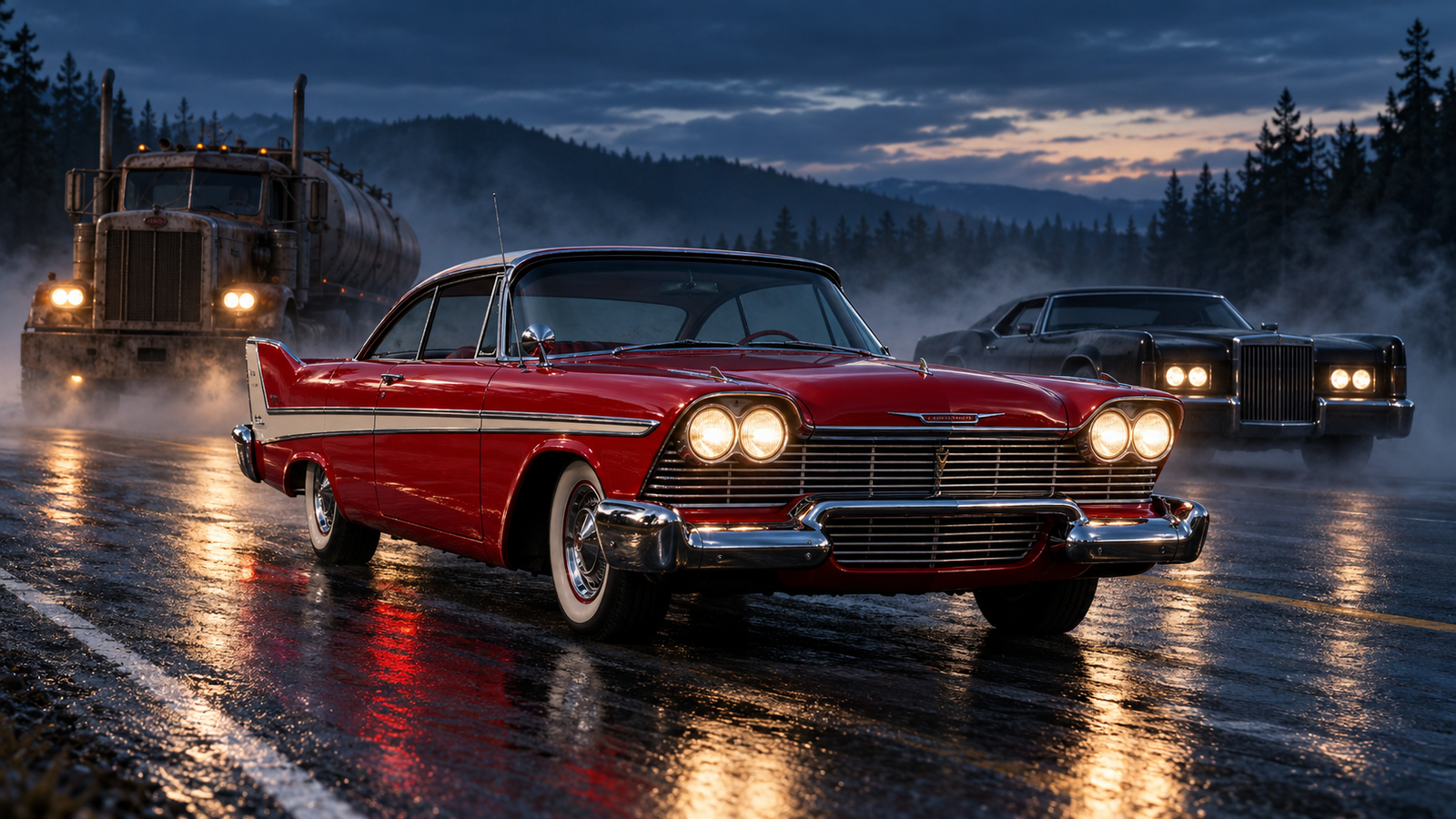
A red Plymouth cruising through the darkness shouldn’t be frightening. Neither should a battered Oldsmobile parked outside a cabin. Put them in the right horror film, though, and even an ordinary set of headlights can feel like a threat.
For Halloween, we’re looking at the cars that earned a place in horror cinema through sinister styling, memorable appearances and, occasionally, a determination to kill their owners’ enemies.
Plymouth Fury — Christine (1983)
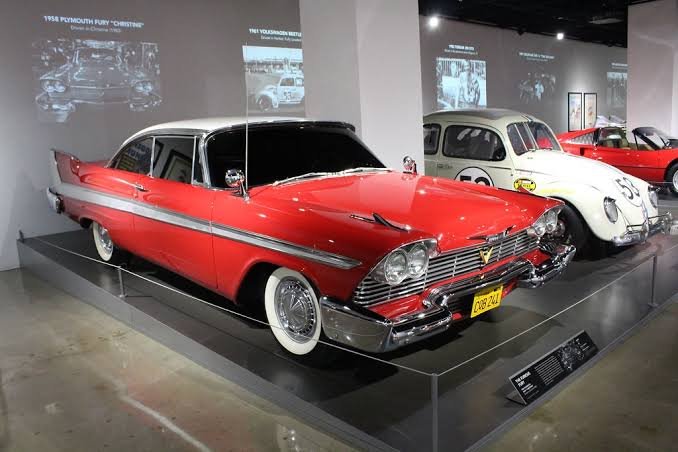
Few horror cars have a personality as strong as Christine. In John Carpenter’s adaptation of Stephen King’s novel, a 1958 Plymouth Fury becomes an obsession for teenager Arnie Cunningham, with increasingly deadly consequences.
The Plymouth’s shape does much of the work. Its tailfins, broad grille and chrome detailing belong to an era when American manufacturers made even everyday cars look theatrical. In red and white, Christine is beautiful enough to explain Arnie’s fascination.
Then there’s the way she repairs herself. Watching damaged bodywork return to shape turns something an enthusiast might dream about into something deeply unsettling. This is a restoration project with its own plans.
Christine works because the car is central to the relationship at the heart of the story. Arnie’s growing attachment to the Plymouth makes the horror feel personal long before another victim appears in her headlights.
Custom Lincoln Continental — The Car (1977)
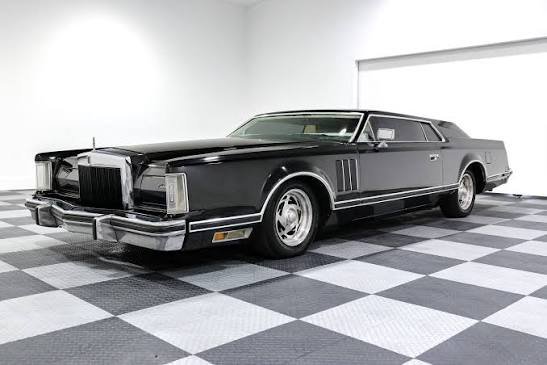
The machine in The Car looks threatening from the outset.
The film’s black killer car was created by customiser George Barris using a Lincoln Continental as its basis. Its heavy bodywork, low roof and recessed windows give it an almost armoured appearance.
Those changes matter more than a recognisable badge. With the driver obscured, there’s little human presence to read. The car becomes a dark shape bearing down on people, rather than a vehicle with someone visibly behind the wheel.
It’s a useful reminder that a convincing horror prop doesn’t need fangs or elaborate decoration. Alter the proportions, hide the occupants and let the engine announce its arrival.
Oldsmobile Delta 88 — The Evil Dead (1981)
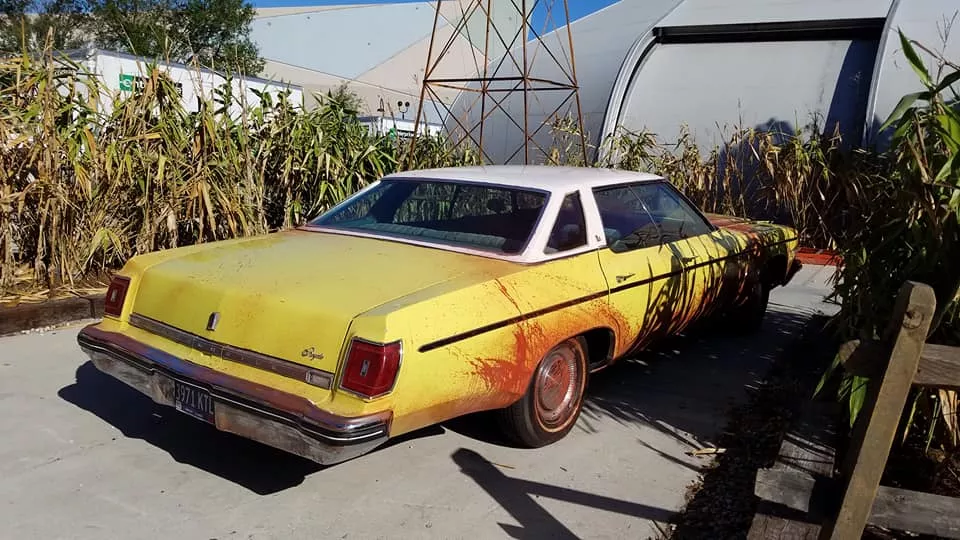
Not every horror icon is the villain. The 1973 Oldsmobile Delta 88 in The Evil Dead earns its place through its connection to Ash Williams and director Sam Raimi.
The big American saloon carries the group towards the isolated cabin where the story unfolds. Its worn, everyday appearance makes it a fitting introduction to a film in which an ordinary trip becomes something grotesque.
The Oldsmobile also became a recurring presence in Raimi’s filmmaking. For fans, spotting it offers a small connection between films with very different settings and budgets.
Its appeal is almost the opposite of Christine’s. There’s no glamorous restoration fantasy here: just a familiar, slightly shabby car that horror audiences have learnt to recognise.
Chevrolet Nova — Death Proof (2007)
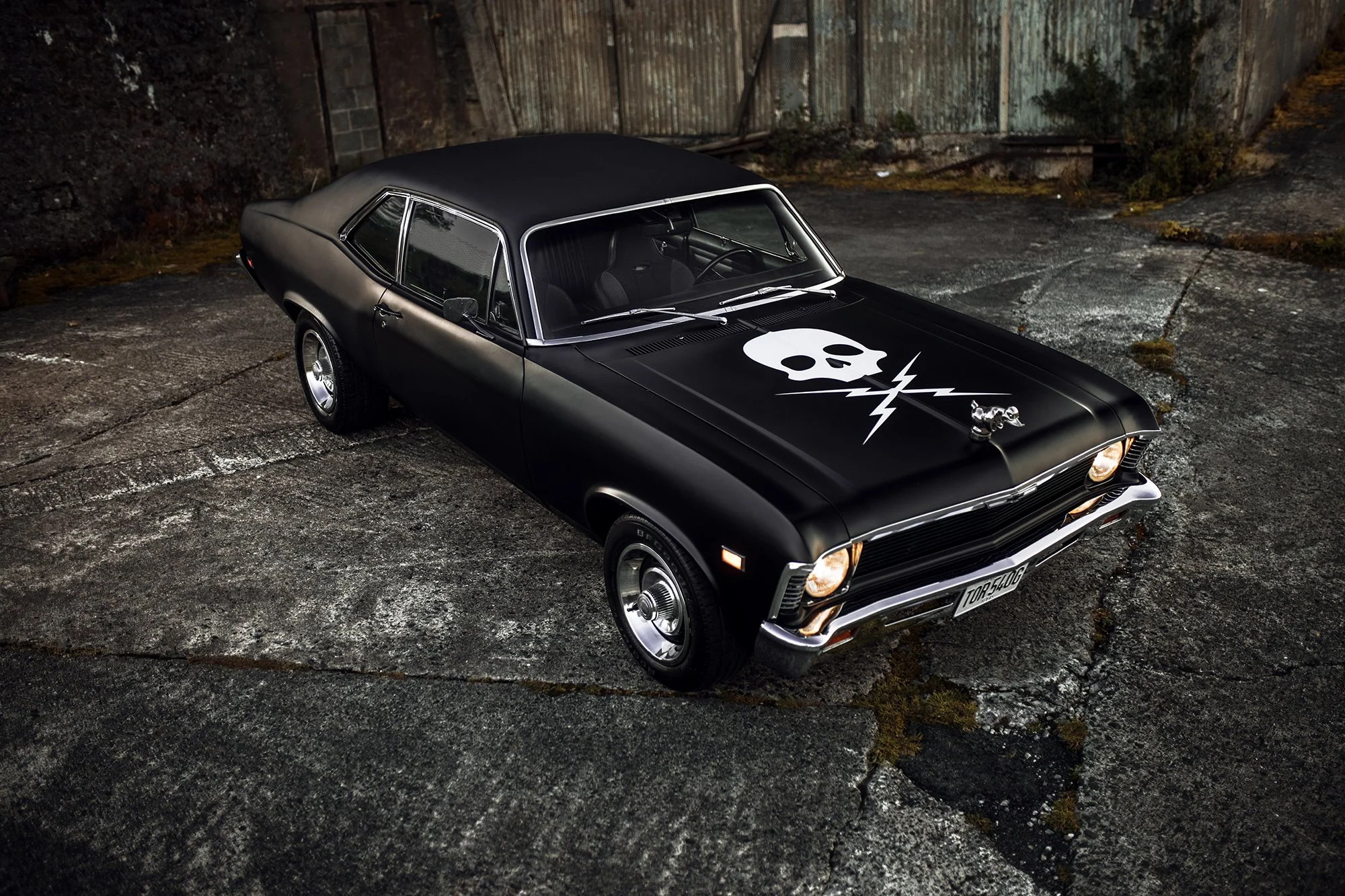
Quentin Tarantino’s Death Proof brings the danger back to the person driving. Stuntman Mike’s Chevrolet Nova is an instrument of violence, with its skull-and-crossbones bonnet graphic making subtlety fairly unlikely.
The Nova’s menace comes from the way the film presents its supposed stunt-car protection. Mike treats the vehicle as a way to survive impacts that are lethal for other people.
That gives the muscle-car imagery an unpleasant edge. The noise, stance and aggressive driving serve a character who uses machinery to intimidate and hurt.
Death Proof mixes slasher-film ideas with car-chase cinema, making the Nova a natural fit for a Halloween watchlist with a motoring theme.
Dodge Challenger — Death Proof (2007)
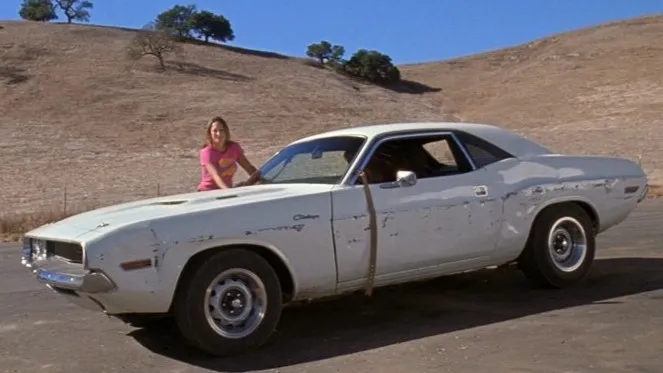
The white 1970 Dodge Challenger offers a different kind of screen presence in the same film. Its connection to Vanishing Point is part of its appeal, but the action gives it a memorable role of its own.
Stunt performer Zoë Bell’s exposed position on the bonnet turns the car into the centre of a particularly uncomfortable sequence. The bodywork looks substantial; the person holding on to it looks terribly vulnerable.
Where the Nova represents Mike’s control, the Challenger becomes part of the fight back. That shift gives the closing action its energy.
It also shows why cars work so well in horror. A passenger compartment can feel reassuringly solid until a filmmaker makes you notice how little separates the people inside from whatever is coming towards them.