A squealing noise from your engine bay is usually a sign that something isn’t working quite as it should. It might last a few seconds when you start the car, disappear once the engine warms up or become louder when you accelerate.
One of the most common causes is a worn or slipping auxiliary drive belt, but it’s not the only possibility. Faulty pulleys, worn bearings and problems with belt-driven components can all produce similar noises.
Some faults are relatively straightforward to repair, while others can leave you stranded if they’re ignored. The trick is working out where the noise is coming from before replacing parts unnecessarily.
Why Is My Engine Making a Squealing Noise?
Most high-pitched squealing noises from the engine bay are associated with the auxiliary belt system.
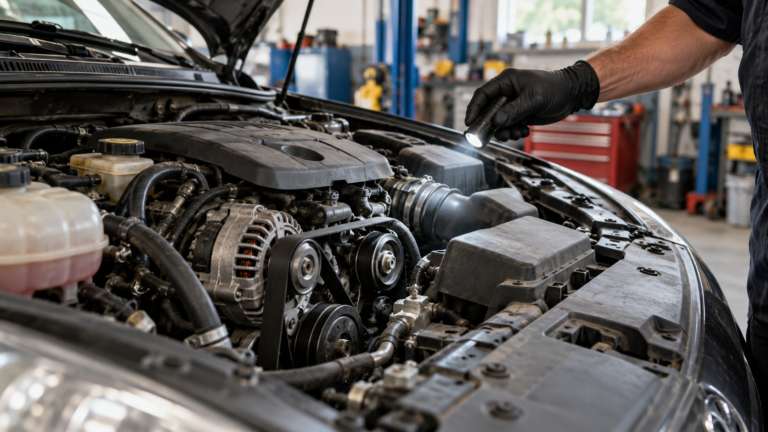
On many petrol and diesel cars, the auxiliary belt, sometimes called the serpentine belt, drives components such as the alternator and air conditioning compressor. Depending on the vehicle, it may also operate the water pump or hydraulic power steering pump.
As the engine runs, the belt travels around several pulleys. If it loses grip, becomes misaligned or encounters a failing bearing, you might hear squealing, chirping or whining.
However, not every noise comes from the belt itself. The circumstances in which it happens can help narrow things down.
A Worn or Slipping Auxiliary Drive Belt
The auxiliary drive belt is a sensible place to start when investigating an engine squeal.
Over time, belts can wear, become contaminated or develop damage. If the belt starts slipping against a pulley, it can produce a sharp, high-pitched noise.
You might notice it when starting the engine on a cold morning, particularly if the weather is damp. The noise may disappear after a few seconds or become more noticeable when the air conditioning is switched on.
Some worn belts develop cracks, frayed edges or a shiny appearance. Others, particularly modern EPDM belts, can lose material without showing obvious cracks.
A visual inspection alone isn’t always enough to establish whether a belt needs replacing.
If the belt is worn, replacing it may solve the problem. However, it’s important to check the tensioner and pulleys at the same time. A new belt can start squealing again if the underlying fault hasn’t been repaired.
Faulty Belt Tensioner or Idler Pulley
The belt tensioner keeps the auxiliary belt under the correct tension while the engine is running.
If the tensioner weakens or its mechanism starts wearing out, the belt may no longer maintain proper contact with the pulleys. This can lead to slipping and squealing, especially when the engine is first started or additional load is placed on the system.
Idler pulleys can also develop problems.
These pulleys guide the belt around the engine, and their bearings are subject to wear. When a bearing begins failing, it may produce a chirping, squealing or rough grinding sound.
Unlike a slipping belt, a damaged pulley bearing may make noise continuously while the engine is running.
A mechanic can check the tensioner, belt alignment and pulley bearings to identify the problem.
If a pulley bearing seizes, the auxiliary belt could break or come off. Depending on which components the belt drives, that may lead to charging problems, loss of steering assistance or engine overheating.
Alternator Bearings Can Make a Similar Noise
The alternator generates electricity while the engine is running and helps keep the battery charged.
On most conventional petrol and diesel cars, it’s driven by the auxiliary belt.
Inside the alternator are bearings that allow its rotating parts to spin smoothly. As these bearings wear, they can produce a high-pitched whining or squealing noise that changes with engine speed.
Some alternators also use an overrunning pulley designed to reduce vibration in the belt drive system. If this pulley develops a fault, it can cause unusual noises or excessive belt movement.
An alternator problem may eventually be accompanied by a battery warning light or charging issues, although a noisy bearing doesn’t always affect electrical performance immediately.
Before replacing the alternator, it’s worth having the pulley, bearings and charging system checked.
Does the Noise Get Worse When You Switch On the Air Conditioning?
If the squealing starts or becomes louder when you switch on the air conditioning, the compressor drive system deserves attention.
On many vehicles, the air conditioning compressor is driven by the auxiliary belt.
When the compressor operates, it can increase the load on the belt. If the belt is worn or the tensioner isn’t working correctly, that additional resistance may cause slipping.
A faulty compressor pulley bearing, clutch or internal compressor component can also produce unusual noises.
It’s worth remembering that some modern compressors use different drive arrangements, so switching the air conditioning on and off won’t always provide a clear diagnosis.
The important point is that a noise associated with air conditioning doesn’t automatically mean the compressor needs replacing. The belt and tensioner should be checked before assuming an expensive component has failed.
Oil or Coolant Leaking Onto the Belt
Sometimes the belt isn’t worn out at all. It may simply be contaminated.
If engine oil or coolant leaks onto the auxiliary drive belt, it can affect how the belt grips the pulleys.
Depending on the type of belt and contamination, this may cause slipping, squealing or premature deterioration.
Possible sources include leaking coolant hoses, water pumps, engine seals or other components close to the belt drive.
You might also notice coolant levels dropping, oil residue around the engine or visible contamination on the belt.
Replacing the belt without fixing the leak is unlikely to provide a lasting repair.
Avoid spraying lubricants or belt dressing products onto the belt in an attempt to stop the noise. These products can hide the symptoms temporarily without addressing the fault, and some may damage the belt.
Squealing When Turning the Steering Wheel
If the noise becomes more noticeable when turning the steering wheel, the power steering system could be involved.
Some older vehicles use a hydraulic power steering pump driven by the auxiliary belt.
When you turn the steering wheel, the pump works harder to provide assistance. If the belt is slipping, this extra load can cause squealing.
A worn pump or low hydraulic fluid level may also produce whining noises.
However, many modern cars use electric power steering and don’t have a belt-driven hydraulic pump.
If your vehicle uses hydraulic steering, the fluid level, pump and belt drive system may need checking.
Suddenly heavy steering is a warning sign that shouldn’t be ignored, particularly if it happens alongside a loud noise from the engine bay.
Could It Be the Timing Belt?
Although the auxiliary belt is a common source of squealing, noises from the timing system can be more serious.
On engines fitted with a timing belt, worn tensioners, idler bearings or other components can produce whining, squealing or rattling noises.
A timing belt keeps the crankshaft and camshaft correctly synchronised. If the belt or its supporting components fail, the consequences can be severe.
On interference engines, a timing belt failure can allow internal engine components to collide, potentially causing extensive damage.
Timing chains can also develop tensioner and guide problems, although these often produce rattling rather than the typical squeal associated with a slipping auxiliary belt.
If the noise appears to be coming from behind the timing cover, don’t assume it’s just an old auxiliary belt. Have it investigated before continuing to run the engine.
Why Does My Engine Squeal When Starting Cold?
A brief squeal immediately after starting the engine is often associated with the auxiliary belt system.
Cold weather and moisture can make an existing belt grip problem more noticeable. At the same time, the alternator may be working harder to replenish the battery after starting.
If the belt is worn, contaminated or incorrectly tensioned, it may slip briefly before the noise disappears.
A weak tensioner can produce similar symptoms.
The fact that the sound goes away after a few seconds doesn’t necessarily mean everything is fine. A belt drive problem can gradually worsen until the noise becomes more frequent.
If your car squeals every morning, it’s worth having the belt system inspected rather than waiting for it to fail.
Why Does the Squealing Get Louder When Accelerating?
If the noise increases as you press the accelerator, it may be linked to a component rotating with engine speed.
The auxiliary belt and its pulleys generally spin faster as engine revs increase. Worn bearings, misaligned pulleys or a slipping belt may therefore become noisier.
However, it’s important to distinguish a squealing noise from a whistle or whine.
Turbocharger problems, intake air leaks and other engine faults can produce high-pitched sounds that are sometimes mistaken for belt noise.
A whistle under acceleration accompanied by reduced power, excessive smoke or an engine warning light deserves further investigation.
How to Tell Where the Squealing Is Coming From
Paying attention to when the noise occurs can help identify the likely cause.
| When the noise happens | Possible cause |
|---|---|
| Immediately after a cold start | Slipping auxiliary belt or weak tensioner |
| Constantly while the engine runs | Worn pulley or alternator bearing |
| When switching on air conditioning | Belt slipping under load or compressor-related fault |
| When turning the steering wheel | Hydraulic power steering pump or belt drive issue |
| When accelerating | Belt, pulley bearing or another engine component |
| Alongside a battery warning light | Alternator or auxiliary belt drive problem |
| After an oil or coolant leak | Contaminated auxiliary belt |
| From behind the timing cover | Possible timing system fault |
These symptoms are useful clues, but they aren’t definitive. Several faults can produce similar noises, so proper diagnosis is important.
How Much Does It Cost to Fix an Engine Squealing Noise?
The cost depends on the vehicle, the component involved and how difficult it is to access.
Replacing an auxiliary belt is usually much cheaper than replacing an alternator or air conditioning compressor.
The following figures are broad estimates for UK garage repairs rather than confirmed current prices.
| Repair | Approximate UK cost |
|---|---|
| Engine noise diagnosis | £50–£120 |
| Auxiliary drive belt replacement | £60–£180 |
| Belt tensioner replacement | £100–£300 |
| Idler pulley replacement | £80–£220 |
| Alternator replacement | £250–£650+ |
| Air conditioning compressor replacement | £350–£900+ |
| Hydraulic power steering pump replacement | £200–£600+ |
| Timing belt kit replacement | £300–£800+ |
Labour costs can vary considerably, particularly on vehicles where several components need removing to access the belt drive.
It’s worth getting the fault diagnosed before approving repairs. Replacing a belt when the actual problem is a seized pulley won’t solve the issue.
Can You Drive With a Squealing Engine?
It depends on what’s causing the noise.
A brief squeal from a worn auxiliary belt doesn’t necessarily mean the car is about to break down, but it shouldn’t be ignored.
If the belt breaks, you could lose battery charging, hydraulic power steering assistance or coolant circulation, depending on the engine’s design.
A failing pulley bearing can also seize unexpectedly.
If the squealing becomes severe, is accompanied by a burning smell or you notice the battery warning light, rising engine temperature or unusually heavy steering, stop somewhere safe and switch off the engine.
Don’t continue driving with an overheating warning or a suspected timing belt fault.
If you’re unsure whether the vehicle is safe, arrange professional assistance rather than driving it to a garage.
Can You Check a Squealing Belt Yourself?
There are a few basic checks you can make without dismantling anything.
With the engine completely switched off and the key removed, look for obvious belt damage, fluid leaks or loose components, provided you can inspect them safely.
You may be able to spot frayed belt edges, missing ribbing or visible contamination.
However, some belt wear isn’t obvious, and the pulleys and tensioner may need more detailed inspection.
Never put your hands, tools or loose clothing near a moving auxiliary belt. Don’t attempt to spray water or other substances onto a running belt to locate the noise.
If you can’t identify the problem visually, a garage can inspect the belt drive and use suitable diagnostic methods to isolate the source.
Frequently Asked Questions
Why is my engine squealing but the belt looks fine?
A belt can appear to be in good condition while still being worn or slipping. The noise could also come from a faulty tensioner, pulley bearing, alternator or another component.
Will a squealing auxiliary belt eventually break?
It can. A squealing belt may be worn, slipping or affected by another mechanical fault. Continued use can lead to further deterioration, although the noise alone can’t predict when a belt might fail.
Why does my car squeal when I first start it?
A worn or slipping auxiliary belt is one possibility, particularly in cold or damp weather. A weak tensioner or failing pulley can produce similar symptoms.
Can a bad alternator make a squealing noise?
Yes. Worn alternator bearings or a faulty overrunning pulley can cause squealing, whining or chirping noises. A slipping auxiliary belt can also make noise when the alternator is under load.
Can I spray WD-40 on a squealing belt?
No. WD-40 and similar lubricants aren’t suitable fixes for a slipping auxiliary belt. They can affect belt grip and may damage the material. The underlying cause needs to be identified and repaired.
Is an engine squealing noise expensive to fix?
Not necessarily. If the problem is a worn auxiliary belt, repairs may be relatively inexpensive. Faulty alternators, compressors and timing system components can cost considerably more.
What Should You Do Next?
If your engine has started squealing, pay attention to when the noise happens and whether it’s getting worse.
A brief squeal on a cold morning may point towards the auxiliary belt, while a constant high-pitched noise could suggest a worn pulley bearing. Changes when using the air conditioning or turning the steering wheel can provide further clues.
The best approach is to have the belt drive system checked before replacing components.
Catching a worn belt or failing tensioner early is usually far less troublesome than dealing with a breakdown caused by a snapped belt or seized pulley.