A whining noise when accelerating can come from the engine’s belt-driven accessories, a turbo air leak, the gearbox or the final drive. Sometimes a sound that seems linked to acceleration actually follows road speed, bringing tyres and wheel bearings into the investigation.
The most useful clue is when the noise changes. Does its pitch rise with engine revs, become louder only when you press the accelerator, or continue after you ease off?
Those differences can help a garage narrow the search. They cannot identify a failed part on their own, so avoid ordering an alternator, turbo or gearbox repair based purely on how a noise sounds.
First, Work Out What the Noise Follows
Acceleration changes engine speed, vehicle speed and the load on the drivetrain. That means several different faults can produce similar symptoms.
Use observations from normal driving rather than deliberately provoking the noise. This table is a starting point, not a diagnosis.
| What you notice | Areas worth investigating |
|---|---|
| Pitch follows engine revs, including when stationary | Belt drive, pulleys, alternator or another engine-driven accessory |
| Noise appears mainly under acceleration | Turbo and intake system, gearbox or final drive |
| Noise follows road speed and continues after easing off | Tyres, wheel bearings or drivetrain components |
| Sound changes with steering effort | Hydraulic power steering, if fitted |
| Noise changes with air conditioning use | Compressor, its drive system or changing belt load |
| Whine occurs mainly in one gear | Gearbox gears or bearings, depending on the transmission |
If the sound also happens while stationary, that points away from road-wheel components. However, it doesn’t completely rule out the transmission, because some gearbox components can rotate while the vehicle is stopped.
1. Auxiliary Belt, Tensioner or Pulley Problems
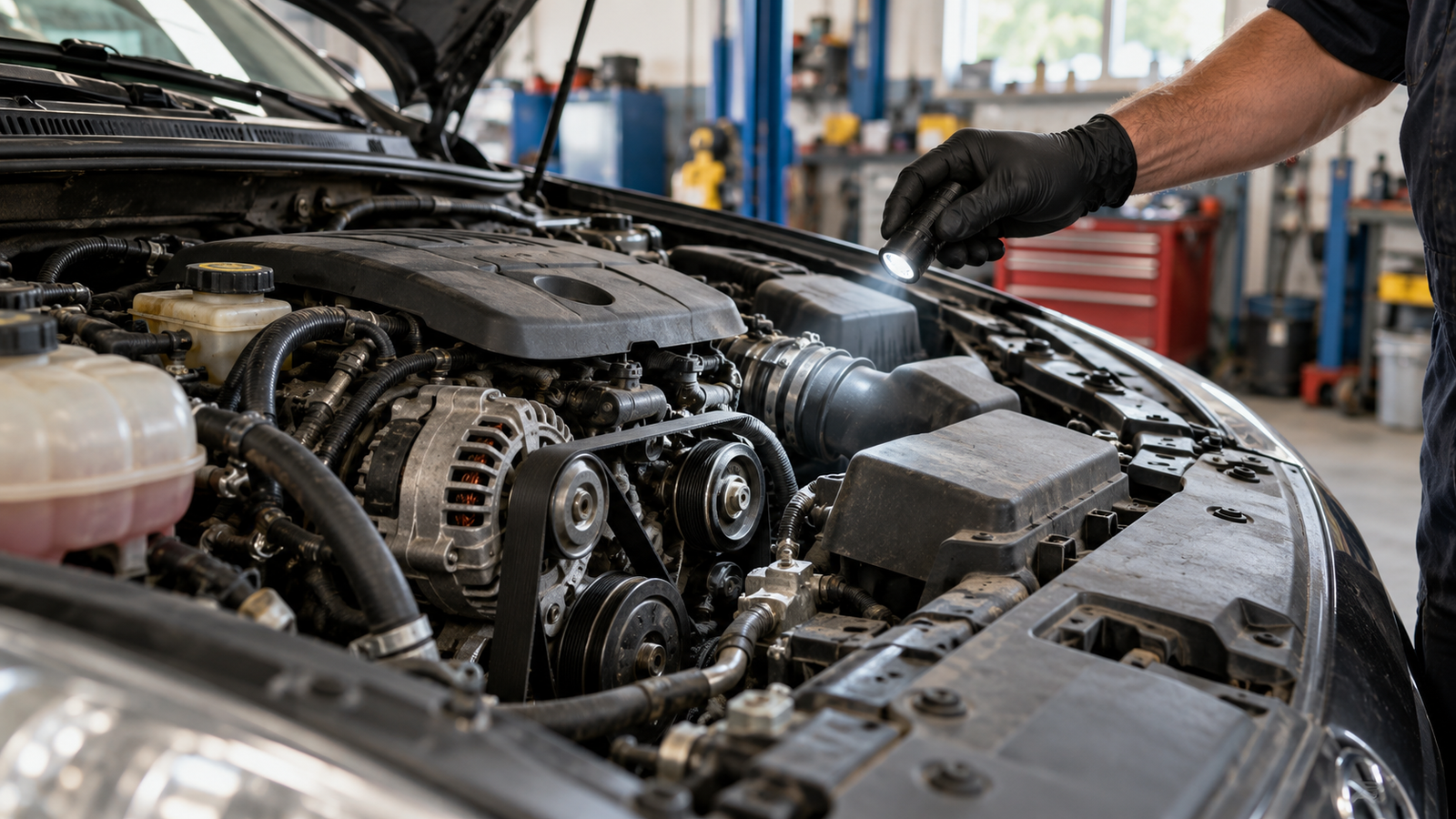
On many petrol and diesel cars, an auxiliary belt drives the alternator, air conditioning compressor and sometimes other components. A worn bearing in an idler pulley or tensioner can make noise that changes with engine speed.
A slipping belt more commonly produces a squeal, while a damaged bearing may sound rough, whirring or whining. Those descriptions overlap, particularly from inside the cabin.
Gates’ belt-drive guidance explains why pulley alignment and bearing condition matter when investigating accessory-drive noise. gatestechzone.com
Replacing the belt alone won’t cure a worn pulley bearing or a faulty tensioner. The complete drive system needs checking, including any contamination from oil or coolant leaks.
Don’t reach near a running belt, spray lubricant onto it or remove it as an informal diagnostic test. Depending on the engine, that belt may drive equipment essential to safe operation.
2. Alternator Bearings or Pulley Wear
The alternator contains bearings and, on some vehicles, a decoupling pulley. Wear in these components can contribute to a noise that rises with engine revs.
A charging warning light or electrical problems would add useful evidence, but their absence doesn’t prove the alternator bearings are healthy.
Ask the garage to distinguish a mechanical alternator noise from a neighbouring tensioner, idler or compressor. Replacing the alternator without isolating the source can be an expensive guess.
3. A Turbo or Pressurised Air Leak
On a turbocharged car, a faint, familiar whistle under acceleration may be normal. A new or suddenly louder whistle, hiss or siren-like noise deserves attention, especially with reduced power or smoke.
The turbo itself isn’t the only possibility. Escaping air from a hose, intercooler or connection can become more noticeable as boost pressure builds.
A garage may need to inspect the pipework and perform an appropriate leak test. A noise alone cannot distinguish an air leak from internal turbo damage.
If the noise arrives with heavy smoke, significant power loss or an oil-pressure warning, stop safely and arrange assistance. Don’t repeatedly accelerate to see whether it clears.
4. Gearbox or Transmission Noise
A whine from the gearbox area may become more noticeable under load or in a particular gear. Possible causes include worn gears or bearings; on some automatic transmissions, hydraulic pump or fluid-related problems may also be involved.
Note whether the sound changes during normal gear changes and whether there is slipping, delayed engagement, juddering or a warning message.
Do not assume topping up the fluid will solve it. The correct specification and checking procedure depend on the gearbox, and many units have no conventional dipstick.
Avoid universal additives or a speculative flush before the fault has been diagnosed. A fluid service cannot repair damaged gears or bearings.
5. Differential or Final-Drive Wear
The differential allows driven wheels to turn at different speeds when cornering. Its gears and bearings can produce a whine when worn or incorrectly set up.
The noise may change between acceleration and lifting off because the load through the gearing changes. On a rear-wheel-drive car it may appear to come from the rear, although sound location inside the cabin can be misleading.
A leak, incorrect lubricant level or internal wear needs investigation. Front-wheel-drive and all-wheel-drive layouts have different arrangements, so identifying the drivetrain is part of the diagnosis.
Don’t treat a noise that disappears when you ease off as harmless. The load has changed; the underlying fault may still be present.
6. Hydraulic Power Steering Problems
If the whine becomes more noticeable while turning at low speed, check whether the car has hydraulic power steering. Low fluid, air in the system or pump wear may be involved.
Many modern cars use electric power steering and have no hydraulic reservoir to top up. Identify the system before buying fluid or trying to locate a pump.
Where the handbook provides an owner-level check, follow its instructions and use only the specified fluid. A low level needs its cause investigated rather than repeated topping up.
Don’t hold the steering against full lock to reproduce the noise. If steering assistance suddenly changes or the wheel becomes unusually heavy, stop safely and seek help.
7. Tyres or Wheel Bearings
Road-speed noise can be mistaken for an acceleration-related whine simply because it gets louder as the car travels faster.
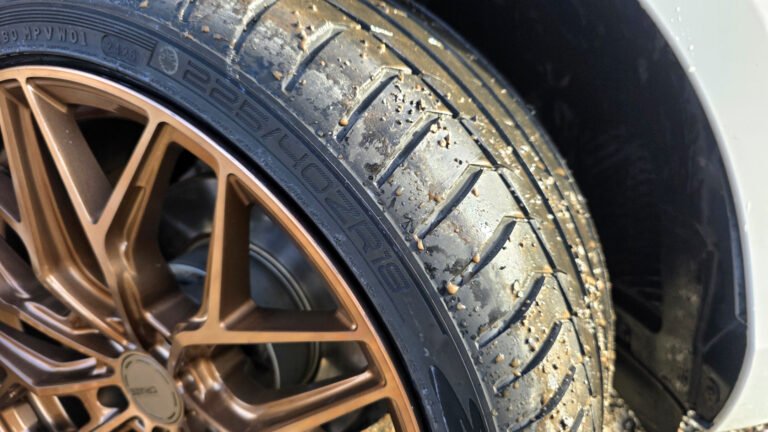
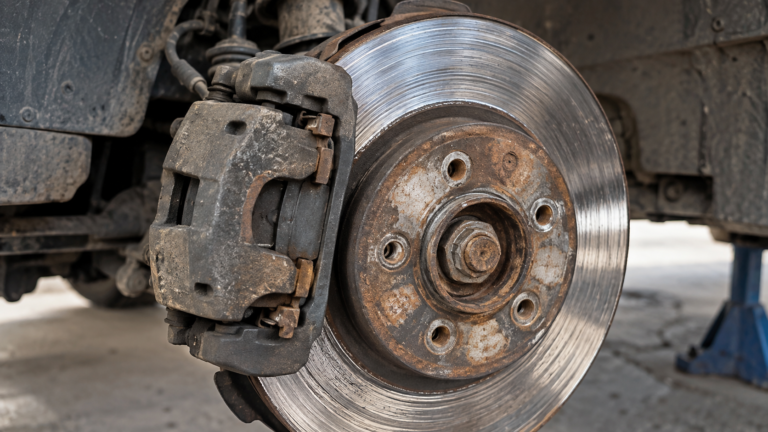
Wheel bearings more typically hum, rumble or growl. Tyre tread patterns, uneven wear and road surfaces can also produce a drone that travels through the cabin.
Notice whether the sound changes on different road surfaces or during ordinary bends. Don’t weave across the road to test it, and don’t use a change in noise alone to decide which bearing needs replacing.
What Can You Safely Check Yourself?
With the vehicle safely parked and switched off, record the symptoms and look for obvious clues without dismantling anything.
- Note when the noise began and whether it followed servicing, repairs or a tyre change.
- Record any warning lights, power loss, steering changes or gearshift problems.
- Check tyre pressures against the vehicle’s guidance and inspect accessible tread for unusual wear.
- Look for fresh fluid beneath the parked vehicle without crawling underneath it.
- Check only those fluid levels the handbook identifies as suitable for owner inspection.
Keep hands and clothing clear of fans, belts and hot components. Electric cooling fans can operate unexpectedly, and hybrid engines may start while the vehicle is in its ready state.
If recording the noise would help, have a passenger do it. Don’t use your phone while driving or continue driving a potentially unsafe car to collect a recording.
Can You Keep Driving With a Whining Noise?
There is no safe universal distance. A familiar operating sound is different from a new whine that is getting louder, and noise alone cannot establish whether a journey is safe.
Stop safely and arrange assistance if it accompanies an oil-pressure warning, overheating, smoke, a burning smell, serious vibration, loss of drive or a significant change in steering or braking.
A new whine without those symptoms still warrants prompt assessment. If you’re unsure whether to move the vehicle, ask your garage or breakdown provider rather than testing it with harder acceleration.
What Should the Garage Check First?
Give the technician the vehicle details and a clear description of when the sound happens. Explaining that it occurs only under load, in one gear or with the air conditioning on is more useful than guessing which component has failed.
Diagnosis may involve a controlled road test where safe, fault-code checks, leak inspection and isolating rotating components. No stored fault codes does not rule out a mechanical problem.
Ask for the identified cause before authorising replacement parts. There isn’t one standard repair for a whining noise when accelerating: the right fix depends on locating its source.