A replacement backbox mainly changes the rear silencer and tailpipe arrangement. A cat-back replaces a larger section behind the catalytic converter, while a sports cat changes an emissions-control component. They’re different upgrades with different costs, purposes and legal considerations.
For a road car, start by deciding what you want to change: appearance, sound, a worn-out system or a genuine restriction identified as part of a tuning plan. More noise doesn’t prove an engine is making more power.
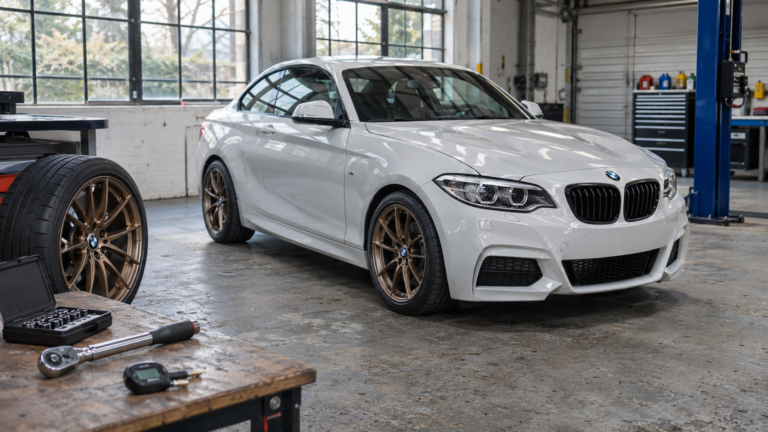
I had a custom exhaust built for my BMW 218i at Lathom Motorcraft, with a backbox delete and dual outlets. I also changed the rear bumper and added a gloss black diffuser to complete the new look.
Watch and Listen: My BMW 218i Custom Exhaust
Here’s my BMW 218i with its custom backbox-delete exhaust and dual outlets, built by Lathom Motorcraft. I also changed the rear bumper and added a gloss black diffuser to finish the look. The clip gives you an idea of the sound, although this will vary depending on your speakers or headphones.
What’s the difference between the main exhaust upgrades?
Exhaust layouts vary, particularly on cars with several catalysts, particulate filters or valves. Check exactly which parts a supplier’s package replaces before ordering.
| Upgrade | What changes | Main consideration |
|---|---|---|
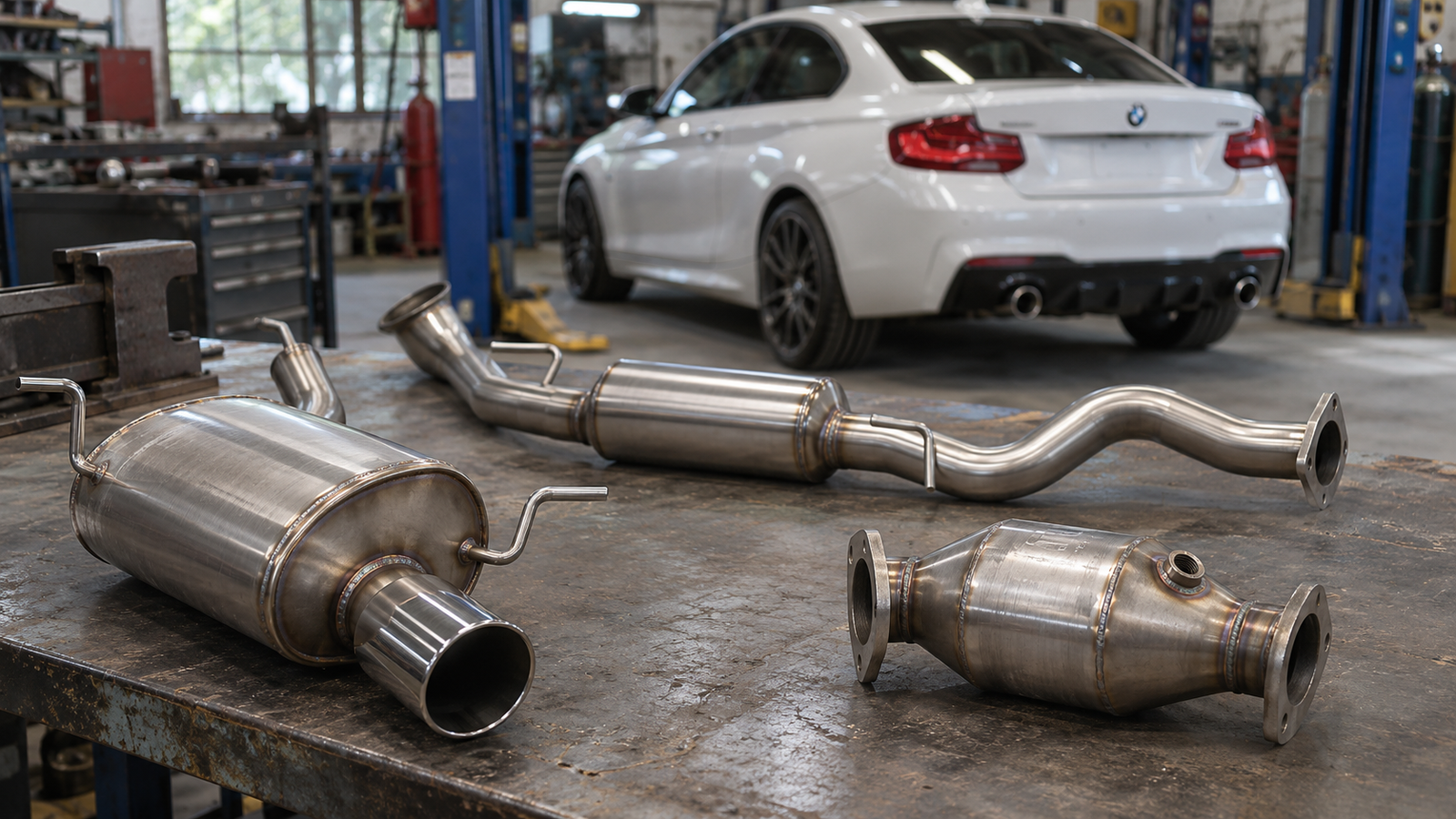
| Replacement backbox | Rear silencer, often with different tips | Sound control, fit and appearance |
| Backbox delete | Rear silencer replaced with pipework | Noise, drone and road-use compliance |
| Cat-back | System behind the catalytic converter | Included silencers and retained emissions equipment |
| Sports cat | Catalytic converter replaced | Application-specific approval and emissions performance |
Tailpipe appearance doesn’t tell you which system is underneath. Two outlets can be fed by one pipe that splits towards the rear, rather than two separate exhaust paths from the engine.
What does a replacement backbox do?
The backbox is the rear silencer. Its internal design helps control exhaust noise before gases leave through the tailpipe.
An aftermarket replacement may use different internal passages, sound-absorbing material, outlet positions or finishes. It can change the exhaust note and rear appearance while retaining a silencer.
Results depend on the engine and the rest of the exhaust. A backbox that sounds restrained on one model may behave differently on another, especially if other silencers have already been removed.
Don’t judge it solely from a clip recorded beside the tailpipe. Ask about the sound inside the cabin, cold starts and steady motorway cruising.
How is a backbox delete different?
A backbox delete removes the rear silencer and replaces it with pipework. Other silencers and emissions equipment may remain, depending on the vehicle and work specified.
It usually allows more exhaust noise through, but the result can include an unwanted booming sound inside the car. This is commonly called drone and may be most noticeable at a particular engine speed under load.
A short burst of acceleration won’t tell you whether a system is comfortable on a long journey. Discuss everyday cruising speeds and the possibility of retaining or adding suitable silencing before commissioning work.
Removing a rear silencer isn’t the same as removing a catalytic converter. However, keeping the catalyst doesn’t settle the separate question of noise compliance.
What is a cat-back exhaust?
A cat-back generally replaces the pipework and silencers downstream of the catalytic converter. On some cars, the product may start after a different emissions component, so the supplier’s diagram matters more than the name.
A complete system gives the manufacturer or fabricator control over more of the pipe routing, silencing and outlet arrangement. It may also replace corroded original sections in one job.
You’ll often see resonated and non-resonated options. A resonated version includes additional sound-control components; a non-resonated version generally omits them and is usually louder within the same product range.
For example, Milltek’s catalogue distinguishes quieter resonated and louder non-resonated systems. That comparison doesn’t make one brand’s resonated exhaust directly comparable with another’s.
For a daily driver, ask about the most restrained suitable option first. You can appreciate an exhaust note without wanting it to accompany every conversation.
What is a sports cat?
A sports catalytic converter is intended to combine exhaust-gas treatment with a design aimed at reducing flow restriction. Whether it offers a useful performance benefit depends on the engine, original catalyst and wider tuning package.
You’ll often see a cell-density figure, such as 200 cells per square inch. This describes the density of passages through the catalyst substrate. It doesn’t tell you everything about its flow capacity, conversion efficiency or suitability.
Substrate size, construction, catalyst coating and operating temperature also matter. A “200-cell” label isn’t proof of quality, an MOT pass or road legality.
Check approval before buying
Government guidance on replacement catalysts says a catalytic converter installed on a vehicle registered on or after 1 March 2001 must be type-approved. Ask for evidence that the approval covers the intended application.
A motorsport-only catalyst shouldn’t be assumed suitable for public-road use because a seller says it can pass an emissions test. Approval and an MOT test address different requirements.
An engine-management warning is another consideration. Don’t treat disabling catalyst monitoring as evidence that a replacement part is compatible or compliant.
For many owners who mainly want a different rear appearance, changing the catalyst adds complexity without addressing their main aim.
Will an exhaust upgrade increase power?
It can, but the result depends on whether the original system is a meaningful restriction at the engine’s operating level.
A backbox change or delete on an otherwise standard road car may produce little measurable improvement. A different sound can make the car feel more dramatic without delivering a worthwhile increase in output.
A wider system or different catalyst may become relevant as airflow increases through other modifications. Pipe diameter alone doesn’t establish performance: routing, silencers and the engine’s characteristics all influence the result.
Ask for evidence from the same engine specification and comparable before-and-after testing. Don’t apply gains from a heavily modified car to a standard one.
Also avoid the claim that every engine needs exhaust “back pressure”. The useful goal is a system designed for the engine’s flow and pressure-wave behaviour, rather than restriction added for its own sake.
Do you need a remap afterwards?
A replacement rear silencer or cat-back that retains the original emissions equipment often doesn’t require an engine remap. Confirm this for the exact system and vehicle.
Changing a downpipe or catalyst needs a more detailed discussion with the supplier and tuner. Hardware requirements, engine control and legal suitability must all be considered.
A remap won’t make an unsuitable exhaust road legal. Nor should a warning light simply be ignored because the car still drives normally.
My BMW’s custom exhaust and rear-end changes

Lathom Motorcraft built the custom exhaust on my BMW 218i, removing the backbox and creating dual outlets. I then changed the rear bumper and added a gloss black diffuser to bring the rear-end design together.
The earlier photograph shows the pipework more clearly before the diffuser was fitted. The later image shows the completed appearance, with the outlets positioned beneath the new rear trim.
That’s an important part of planning a custom system. The bumper, diffuser and tailpipes need to be considered together so their positions and clearances work as a package.
My installation is a personal example of the work carried out, rather than a measured power comparison. Two visible outlets also don’t mean the car has gained two independent exhaust systems.
Fitment details that deserve attention
Exhaust components expand and move as they heat up, and the engine moves on its mounts. Clearance needs to account for that movement.
Before signing off a new system, have the installer check:
- Clearance around the bumper, diffuser and other heat-sensitive parts.
- Suitable routing near fuel lines, brake pipes and wiring.
- Secure hangers without unwanted strain.
- Leak-free joints and adequate ground clearance.
- Tailpipe position when the system is hot.
- Any exhaust-valve operation and retained heat shielding.
A tailpipe touching a gloss black diffuser can damage the finish or the plastic itself. Don’t accept contact on the basis that it looks aligned while the car is cold.
Stainless steel can offer corrosion advantages, but workmanship still matters. Poor welds, unsuitable hangers or awkward routing won’t be fixed by a polished finish.
UK noise rules, MOT tests and insurance
Government guidance on vehicle noise states that it’s illegal to modify an exhaust to make a vehicle noisier after type approval. Police can also act over ineffective silencing or excessive noise caused by the way a vehicle is driven.
That makes noise compliance a necessary part of choosing a road-car exhaust. A professional installation or the retention of the catalytic converter doesn’t establish compliance by itself.
The DVSA MOT manual requires exhaust noise not to be unreasonably above that expected from a similar vehicle with a standard silencer in average condition. Excessive noise is a major defect.
Emissions equipment and the relevant exhaust-emission requirements also remain part of the assessment. An MOT pass isn’t certification that an exhaust meets every road-use rule.
Tell your insurer about the planned exhaust and associated bodywork changes before fitting. Confirm acceptance and how cover applies to the modified parts.
Which exhaust upgrade should you choose?
For a different rear appearance, begin with the outlet design and a suitable silenced rear section. A catalyst change isn’t necessary simply to reposition the tips.
If the original system is deteriorating, compare a complete replacement with the cost of repairing several sections. Ask what’s included, which emissions components remain and what approval evidence is available.
A sports cat deserves consideration only when there’s a clear technical reason and a suitable approved product for the application.
Choose the system around how you use the car. Good fitment, appropriate silencing and clear evidence of compliance will matter long after the novelty of the first start-up has passed.