For a daily driver that needs a modest drop in ride height, quality lowering springs are often the sensible choice, provided the existing dampers are healthy and compatible.
Coilovers make more sense when you want to adjust the height or need a suspension package suited to more demanding use.
Neither option automatically makes a car handle better. The spring and damper combination, available suspension travel and quality of the setup matter more than how small the wheelarch gap looks on the driveway.
What’s the difference between coilovers and lowering springs?
Lowering springs replace the car’s original coil springs. They give a fixed reduction in ride height, with the final result depending on the specific kit and the car’s original suspension.
The spring supports the car’s weight and compresses as the wheel moves over bumps. The damper, commonly called a shock absorber, controls that movement so the car doesn’t keep bouncing afterwards.
A conventional lowering spring kit leaves the dampers in place. That makes their condition and suitability an important part of the decision.
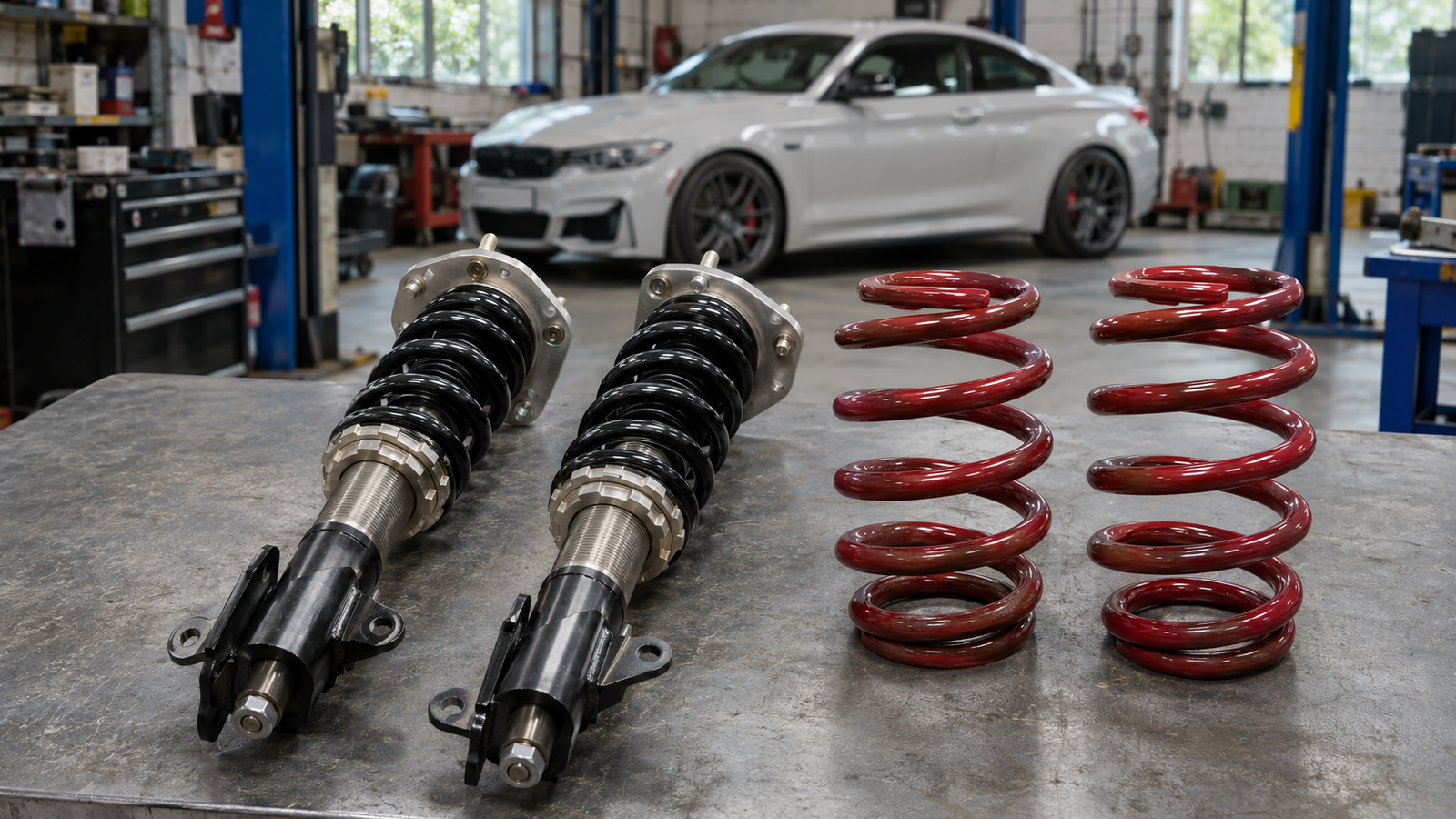
Aftermarket coilover suspension kits generally replace both springs and dampers and add threaded height adjustment. Some also let you adjust the damping, but that feature isn’t included with every kit.
The name can cause confusion. Many standard suspension struts already have a coil spring around a damper. In aftermarket use, “coilovers” usually means an adjustable suspension kit; some cars still retain separate rear springs and dampers within that package.
| Consideration | Lowering springs | Coilovers |
|---|---|---|
| Ride height | Fixed by the spring kit | Adjustable within the specified range |
| Dampers | Usually retained | Usually replaced within the kit |
| Damping adjustment | No adjustment added | Available on some kits |
| Initial parts cost | Generally lower | Generally higher |
| Main appeal | A straightforward, modest drop | More control over the setup |
When lowering springs are the better choice
If you’re happy with how your car drives and mainly want to reduce its wheelarch gap, lowering springs are a reasonable starting point. A suitable kit can give you the appearance you want without paying for adjustments you’re unlikely to use.
They also keep the decision simple. You choose a kit with an appropriate drop, have it fitted correctly and check the wheel alignment. There are no height collars to experiment with afterwards.
Some springs are designed to work with factory dampers. Eibach describes its performance spring range this way, although compatibility still needs checking for the exact vehicle and kit.
That doesn’t mean every lowering spring will work properly with every original shock absorber. A kit intended for a modest drop on standard suspension is a different proposition from an aggressive lowering kit fitted to tired dampers.
Check how the advertised drop is measured, too. If it’s quoted against standard suspension, a car already fitted with a lower factory sports setup may sit less dramatically lower than the headline figure suggests.
Can you fit lowering springs to old dampers?
Age or mileage alone won’t tell you whether a damper is fit for reuse. Have the suspension inspected for leaks, poor damping, damaged mounts and worn bushes before ordering parts.
New springs won’t cure worn shock absorbers. If the car already feels poorly controlled over bumps, lowering it while keeping those dampers leaves the underlying problem unresolved.
There’s also a useful middle option: lowering springs paired with compatible replacement dampers. Bilstein’s guidance explains why matching the damper’s operating height to the spring matters and identifies its B8 range as intended for lowering springs.
A matched, fixed-height package deserves consideration if you want fresh suspension but have no need to adjust the ride height.
When coilovers justify the extra cost
Coilovers are worth considering when a fixed spring kit won’t give you the control you need. Height adjustment lets a specialist fine-tune the car’s stance within the kit’s permitted range, rather than relying on one predetermined drop.
That can be useful if you’re particular about the front-to-rear appearance or need to balance your preferred height against clearance. It doesn’t remove the need to check wheel and tyre fitment throughout suspension movement and steering travel.
For regular track use, an appropriate coilover kit can also provide useful setup options. The important word is appropriate: a road kit bought mainly for its lowering range isn’t automatically the right choice for circuit work.
Damping adjustment can add another layer of control. For example, KW’s V3 kit offers separate rebound and compression adjustment, controlling how the damper resists extension and compression respectively.
Those adjustments need a sensible starting point. Turning everything to its firmest setting won’t automatically produce the best handling, particularly on an uneven road. Follow the kit’s recommended settings before making measured changes.
If you’ll set the height once and never touch it again, that’s fine. Just make sure the kit’s ride and damping characteristics justify the cost as well as its adjustability.
Which option is more comfortable?
There’s no reliable answer based on the product name alone. Comfort depends on spring rates, damper tuning, suspension travel, mounts and tyres, as well as the road underneath you.
A well-chosen road coilover kit can be more comfortable than a poorly matched spring-and-damper combination. Equally, modest lowering springs on suitable, healthy dampers may be a better daily setup than coilovers designed around firm responses and a large drop.
Lowering can reduce the room available for the suspension to compress. Eibach’s damper guidance explains how lowering on stock dampers reduces piston travel and can bring the bump stops into play over large bumps or dips.
Bump stops help manage the end of suspension travel. If the car reaches them too readily, the ride can become abrupt. More lowering isn’t necessarily an improvement when it leaves too little movement for the roads you actually drive.
For a daily car, ask about the kit’s intended use and recommended ride height. A driveway, speed hump or loaded boot will soon expose a setup chosen purely for a photograph.
Compare the fitted cost, not just the box price
Springs generally cost less to buy, but both options involve fitting work. Ask for an itemised quote covering the complete job before deciding which offers better value.
Allow for:
- Inspection and replacement of worn mounts, bearings or bushes.
- Any required replacement fixings and associated parts.
- Wheel alignment after installation.
- Setup work and follow-up checks specified by the installer or manufacturer.
- Compatibility with adaptive dampers, where fitted.
If the original dampers need replacing, compare springs plus suitable dampers against a complete coilover kit. The cheaper spring price alone no longer tells you much about the final bill.
Coilovers also need care. Follow the manufacturer’s cleaning and maintenance instructions, particularly around exposed adjustment threads. Don’t assume collars will stay easy to move after years of road dirt and winter salt.
What to check before lowering your car
Order by the exact vehicle application, including axle-load limits and suspension type. Engine, body style and factory suspension options can affect which kit is suitable.
Adaptive suspension needs particular attention. Confirm whether the chosen parts retain its operation or require an approved alternative arrangement; don’t assume a kit for passive suspension is interchangeable.
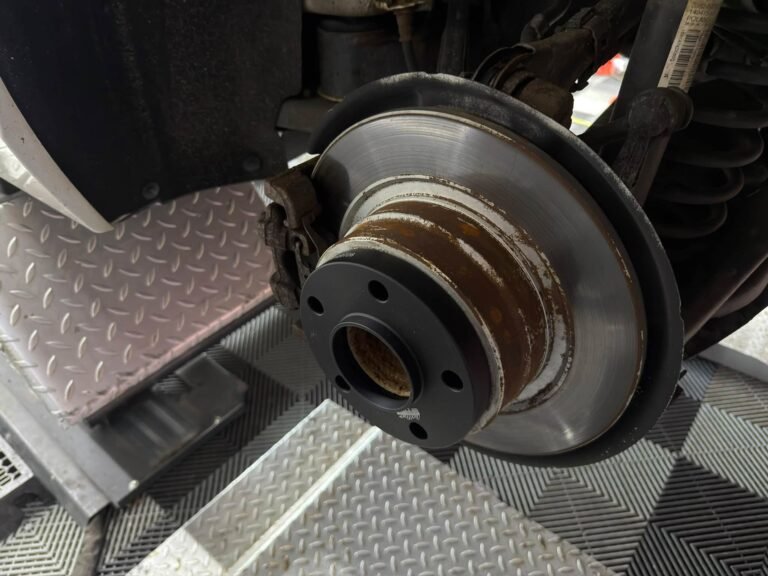
Have a qualified installer check tyre clearance, brake hoses, sensor wiring and suspension travel. Wheels and spacers that clear at the original height may need reassessment once the car is lowered.
Arrange a wheel-alignment check after fitting. Eibach’s installation guidance includes provision for post-installation alignment. If the height is changed again substantially, have the alignment reassessed rather than assuming the previous settings remain suitable.
Speak to your insurer before fitting either option and confirm it will cover the modification. Admiral’s guidance advises customers to declare planned changes beforehand because acceptance and premiums can change.
So, should you choose coilovers or lowering springs?
Choose quality lowering springs if you want a modest, fixed drop and your dampers are suitable and in good condition. They’re often the most straightforward answer for a road car whose owner mainly wants a better stance.
Choose a matched spring-and-damper package if the suspension needs refreshing and you don’t need height adjustment. It can solve the worn-damper problem without adding settings you won’t use.
Choose coilovers if adjustable height or the setup options of a particular kit serve a clear purpose. Budget for the installation and setup that let those parts work properly.
The best choice is the one that suits your car, roads and daily use. A little wheelarch gap is easier to live with than suspension that runs out of movement on the way to work.