A car pulling to one side when driving can have something as straightforward as an incorrectly inflated tyre, but wheel alignment, brake faults and worn suspension parts can cause similar symptoms.
The first useful clue is when the pull happens: all the time, under braking or only when accelerating.
Start with tyre pressures and a visual check, provided the car is safely parked. A sudden or strong pull, particularly with vibration, a burning smell or changed braking, needs prompt professional attention rather than another journey to see whether it improves.
Is it a pull, road camber or an off-centre steering wheel?
Many UK roads slope towards the edge to help water drain away. That slope, known as road camber, can encourage a gentle drift to the left. Crosswinds and grooves in the road can also influence the steering.
A persistent need to steer against the car on different road surfaces deserves investigation. Don’t assume a leftward pull is normal just because you drive in the UK.
An off-centre steering wheel is a slightly different symptom. The car may travel straight while the wheel sits at an angle, which can point towards an alignment or steering-centre issue without producing a constant sideways pull.
Keep both hands on the wheel while assessing what you feel during normal driving. Letting go of the steering wheel is not a safe diagnostic test.
What the symptoms can tell you
| When it happens | What needs checking |
|---|---|
| Constantly during steady driving | Tyre pressures, tyre condition, wheel alignment and brake drag |
| Mainly when braking | Uneven braking force, brake condition and suspension movement |
| Mainly under acceleration | Torque steer, tyre grip differences and worn suspension or drivetrain mountings |
| Immediately after a pothole or kerb impact | Tyre and wheel damage, suspension damage and alignment |
| After new tyres or alignment work | Pressures, tyre specification, fitting and the original diagnosis |
| Mostly on grooved or sloping roads | Road camber, tramlining and tyre condition |
These patterns help a garage narrow its checks. They don’t confirm which part has failed.
1. Incorrect tyre pressures
Tyre pressures are a sensible first check because they affect how the tyres carry the car’s weight and respond to steering. A significant difference between the left and right tyres can contribute to uneven handling.
Check all four tyres when cold, using a reliable gauge and the vehicle manufacturer’s recommended pressures. The information is usually in the handbook, door opening or fuel-filler flap.
Use the figure appropriate to the tyre size and vehicle load. Front and rear pressures may differ, so setting every tyre to the same number isn’t automatically correct. The maximum pressure on a tyre’s sidewall is not the vehicle’s recommended setting.
TyreSafe’s pressure advice explains where to find the correct figures and how incorrect inflation can affect handling.
If one tyre repeatedly loses pressure, have the tyre, valve and wheel checked. Regularly topping it up leaves the underlying leak unresolved.
2. Wheel alignment problems
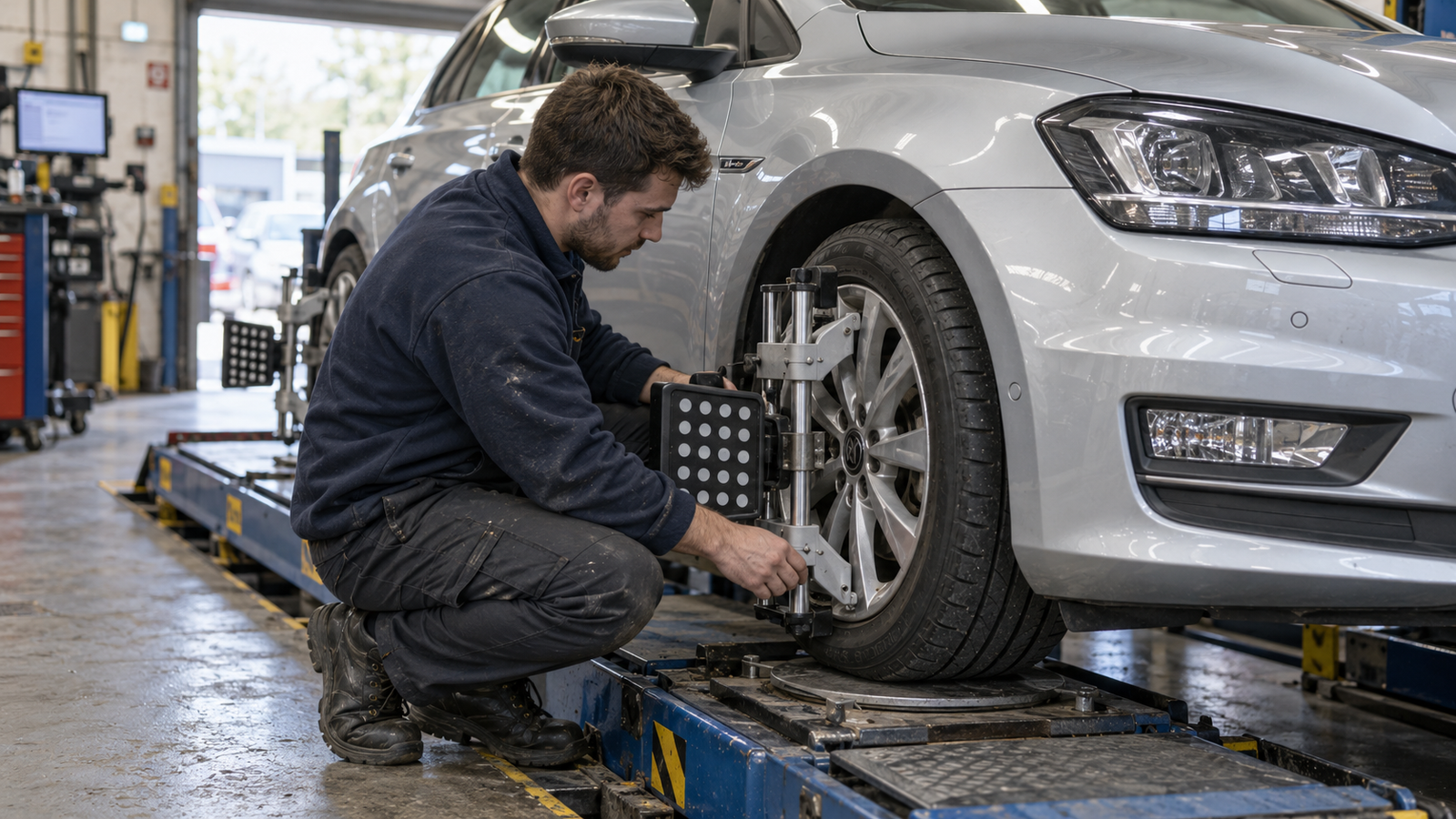
Wheel alignment describes the angles at which the wheels sit and point relative to the car. Incorrect settings can affect straight-line behaviour and cause uneven tyre wear.
A pothole or kerb strike can disturb the geometry, although a pull doesn’t prove alignment is the only problem. Michelin’s alignment guidance identifies impacts and differences in wheel angles as potential causes of altered handling.
Look for a change in steering position or uneven wear across a tyre’s tread. These are useful clues, but a proper alignment check requires workshop equipment and the correct vehicle specifications.
Ask the garage to inspect the tyres, steering and suspension before making adjustments. Aligning a car with a worn joint or damaged component can leave you paying for work that needs repeating after repairs.
A four-wheel measurement can also reveal whether the rear wheels are influencing the car’s direction. Which angles can actually be adjusted depends on the vehicle.
3. Tyre wear, damage or a tyre-related pull
Tyres can influence the direction a car takes even when their pressures are correct. Differences in wear, construction or condition may contribute, while impact damage can affect handling without being obvious at first glance.
A tyre can also generate a sideways force because of its construction, sometimes described as tyre conicity. That is one reason a car may still pull after an alignment check.
From outside the safely parked car, look for bulges, cuts, exposed cords, obvious pressure loss and unusual tread wear. Don’t crawl underneath or put your hands where the car would need lifting to gain access.
If the problem began immediately after new tyres were fitted, return to the fitter. They should check the pressures, specification, fitting direction where applicable and tyre condition.
Don’t swap wheels around simply to experiment. Directional tyres, different front and rear sizes, and vehicle-specific fitting requirements can limit which positions are suitable.
4. Uneven braking or a sticking brake
A car that pulls mainly when you press the brake pedal needs its braking system checked. Unequal braking force across an axle can steer the car sideways as it slows.
Brake manufacturer Bendix lists several causes of brake pull, including contaminated friction material, mismatched pads and seized callipers. Suspension movement under braking can also affect the car’s direction.
A brake that fails to release properly may cause a pull even with your foot off the pedal. Other clues include a burning smell, unusual heat near a wheel or the feeling that the car is being held back.
Don’t touch a wheel, brake disc or calliper to compare temperatures; overheated components can burn you. A strong brake pull, smoke, burning smell or reduced braking performance is a reason to stop safely and arrange recovery.
The direction of the pull alone doesn’t reliably identify the faulty side or component.
5. Worn or damaged steering and suspension parts
Suspension bushes and joints help keep the wheels in their intended positions while allowing controlled movement. When parts wear, the wheel angles can change as the car accelerates, brakes or encounters bumps.
Possible accompanying symptoms include clunks, vague steering, wandering and uneven tyre wear. A damaged spring or bent suspension component may also change how the car sits and drives.
These faults need a physical inspection. An alignment printout cannot, on its own, establish that every steering and suspension component is sound.
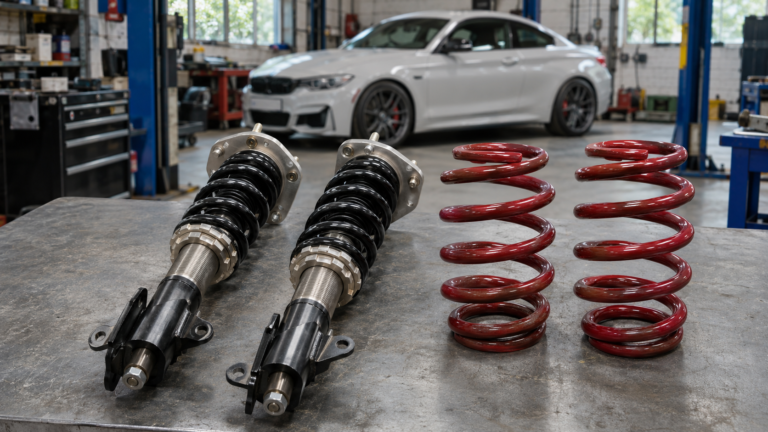
Tell the garage about any recent impact, lowering work or suspension repairs. That history can help explain why the geometry has changed.
6. Pulling under acceleration
Some front-wheel-drive cars can tug at the steering under strong acceleration, a behaviour known as torque steer. Unequal grip and the way power reaches the front wheels can influence how noticeable it feels.
However, a new or worsening pull shouldn’t automatically be dismissed as a characteristic of the car. Incorrect pressures, worn bushes or drivetrain mountings may contribute.
Describe whether it happens under gentle acceleration or only with a large throttle input, and whether the steering settles when you ease off. That distinction is more useful than simply reporting that the tracking feels wrong.
7. Road grooves and tramlining
Tramlining is the tendency for tyres to follow grooves or ridges in the road surface. It can feel like wandering or intermittent tugging rather than a steady pull in one direction.
It may become more noticeable after a change in tyre design or wheel and tyre size. Even so, check pressures, fitting suitability and component condition before treating the behaviour as unavoidable.
If the sensation changes markedly between road surfaces, tell the garage. A pull that remains consistent across different roads suggests a different investigation from steering that follows individual ruts.
Why does my car still pull after an alignment?
Alignment adjusts wheel geometry; it doesn’t repair tyres, release a sticking brake or replace worn suspension components.
Return to the workshop and explain whether the original symptom changed. Ask for the before-and-after measurements and confirmation that the correct vehicle specification was used.
A useful follow-up includes checking pressures, tyre-related forces, brake drag and suspension condition. Repeatedly adjusting alignment without establishing the cause can become an expensive guessing exercise.
An off-centre steering wheel after the work should also be reported, even if the car now travels straight.
Is wheel balancing the same as alignment?
No. Balancing corrects uneven weight distribution around a wheel and tyre assembly. Alignment concerns the angles at which the wheels sit and point.
An imbalance more commonly produces vibration, often noticeable within a particular speed range. A persistent directional pull requires broader checks, although more than one fault can exist at once.
If the steering shakes as well as pulling, describe both symptoms when booking the car in.
What should you do first?
If the pull is mild and there are no urgent warning signs, begin with these checks while the car is safely parked:
- Measure all four cold tyre pressures against the manufacturer’s recommendations.
- Inspect the visible tyre surfaces for damage, pressure loss and unusual wear.
- Note whether the problem began after an impact, tyre fitting or repair.
- Tell the garage when it happens, including any change during braking or acceleration.
Don’t continue driving with a visibly damaged or deflating tyre. Stop safely and arrange assistance if the pull is sudden or strong, the steering feels loose, or braking is affected.
For a persistent pull with no obvious tyre-pressure explanation, book an inspection of the tyres, brakes, steering and suspension before agreeing to alignment work alone.
Frequently asked questions
Can a car pull to one side even if the alignment is correct?
Yes. Uneven tyre pressures, tyre defects, a dragging brake or worn suspension parts can cause a pull even when the alignment measurements are within specification. The next step should be further diagnosis rather than another alignment adjustment.
Why does my car pull to the left on some roads?
Road camber can encourage a gentle drift towards the left, while grooves and crosswinds can also influence the steering. A strong pull or one that persists across different road surfaces needs checking.
Can rear tyres cause a car to pull?
Yes. Rear tyre pressure differences, damage or uneven wear can affect the car’s stability and direction. That’s why an inspection should include all four tyres, even when the symptom is felt through the steering wheel.
Will new tyres fix a car that pulls to one side?
They may help if the existing tyres are causing the problem, but they won’t repair worn suspension parts, incorrect alignment or a sticking brake. Establish the cause before replacing otherwise serviceable tyres.
Should I increase the pressure on one side to stop the pull?
No. Use the manufacturer’s recommended pressures for the tyre size and load. Deliberately creating a pressure difference can affect handling and hide a fault that still needs attention.